Research
My research focuses mainly on exoplanets, stars, and binary systems, ranging from the physical properties of individual objects to population-level trends, formation, and evolution. Below I describe several research themes in more detail.
 Occurrence rates of exoplanets
 Stellar rotation and age
 Binary starsAtmospheres of planets and brown dwarfs
 Statistical inference in astronomy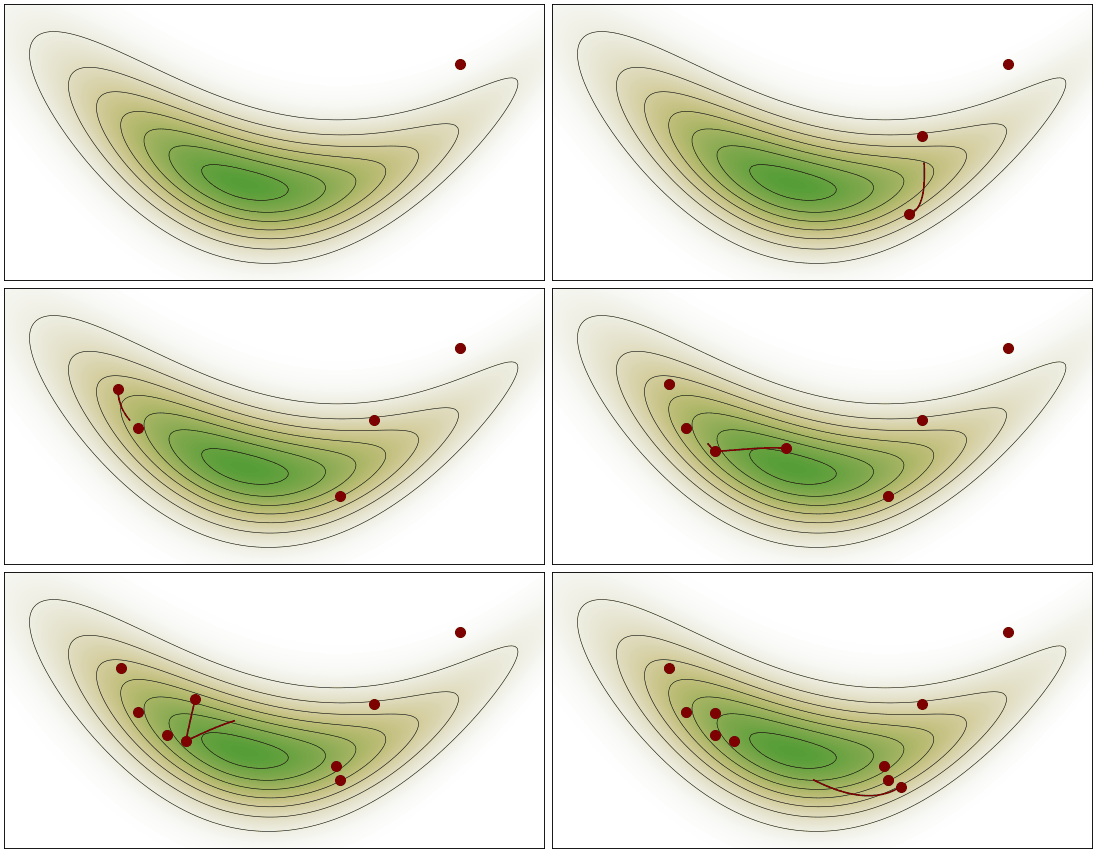
Planetary interiors and atmospheric evolution with TTVs
The transit method detects exoplanets from the small dimming that occurs when a planet passes in front of its host star (Figure 1). Thousands of transiting planets have now been discovered, largely through observations by space telescopes such as NASA’s Kepler and TESS. An important advantage of transiting planets is that the depth of the transit directly constrains the planet’s size (radius): as illustrated in Figure 1, a larger planet blocks a larger fraction of the stellar light. If the planetary mass is also known, we can infer its mean density and thereby constrain its composition and internal structure.
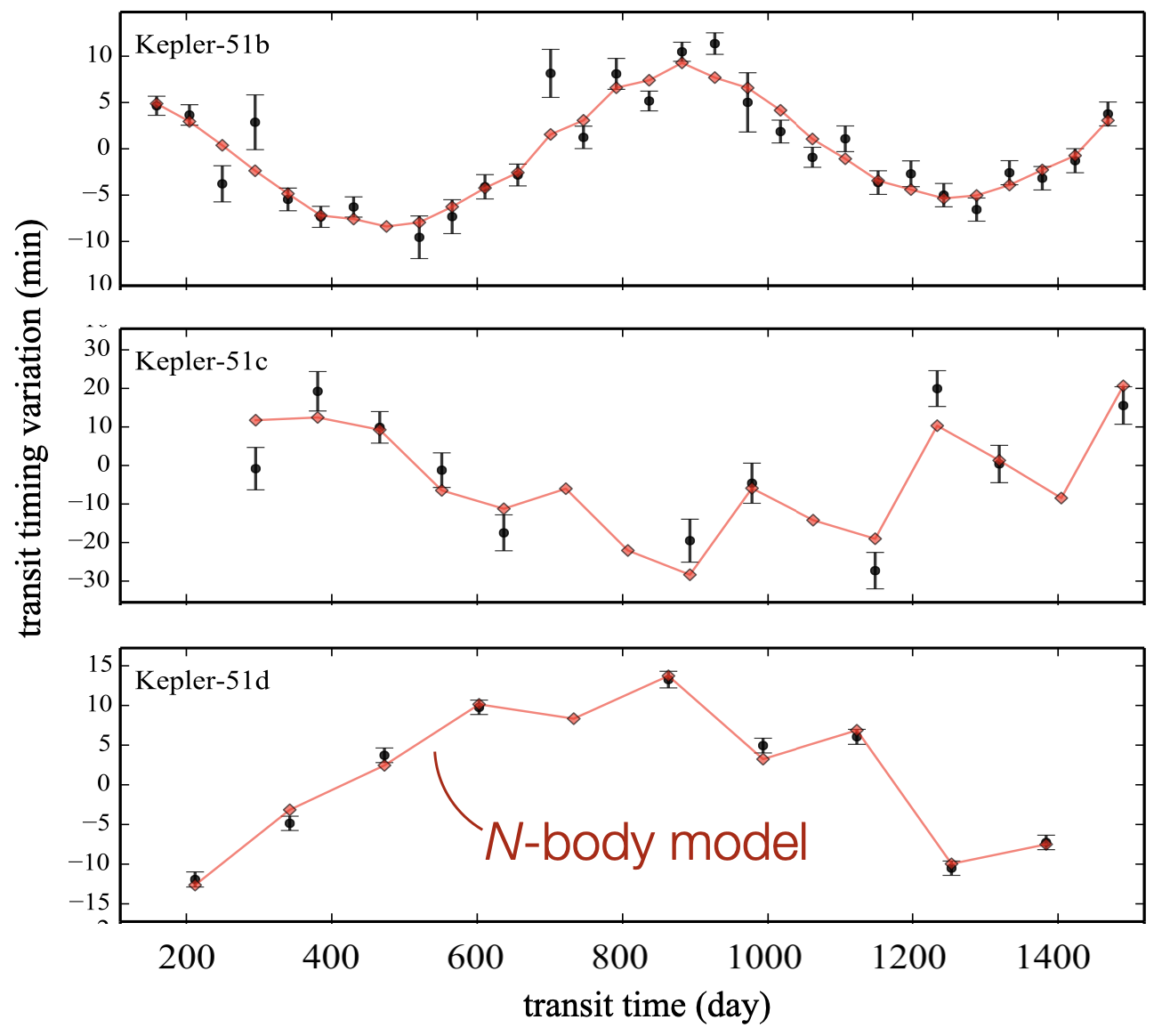
I measure planetary masses using transit timing variations (TTVs). In systems with multiple planets, their mutual gravitational interactions slightly perturb each orbit, causing the observed transit times to deviate from a strictly periodic sequence (Figure 2). By modeling these TTVs with N-body integrations that numerically solve the equations of motion under gravity, we can infer planetary masses and orbital properties (Figure 3).
Young low-density planets and atmospheric evolution
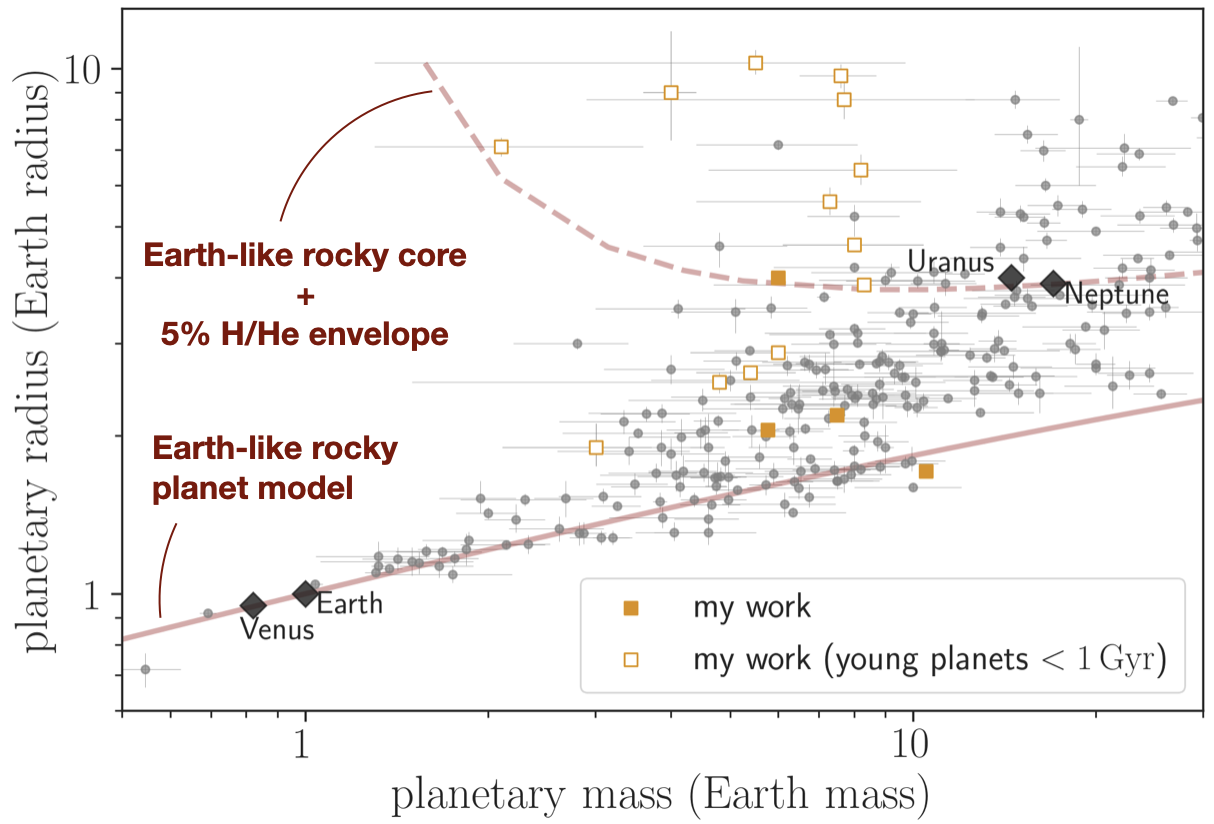
Through TTV analyses, I have contributed to the discovery of new planets and to measurements of planetary masses. In particular, I have shown that some super-Earths (planets with masses roughly 1–10 times that of Earth) orbiting young stars have extremely low mean densities, less than one tenth those of planets in the Solar System. Such planets are often called super-puffs and provide valuable laboratories for studying how planetary atmospheres cool, contract, and escape after formation. The three planets in the Kepler-51 system, for example, are among the lowest-density planets known and are prominent examples of super-puffs (Masuda 2014; Masuda et al. 2024).
More recently, through collaborations with planet-search teams in the United States and Europe, I have focused on TTV analyses of planets around young stars observed by TESS and other facilities, measuring the masses of additional low-density planets (Figure 4). For V1298 Tau, for example, nine years of transit observations showed that all four known planets have relatively small masses for their radii and are therefore low-density objects (Livingston et al. 2026, Nature). These planets are expected to cool, contract, and lose atmosphere as they evolve, potentially becoming the super-Earths and sub-Neptunes commonly found in mature planetary systems. Young, low-density planets therefore provide an important sample for understanding how atmospheres acquired during formation evolve with time.
Open-source TTV code with automatic differentiation
TTV analyses require repeated N-body integrations while varying the masses and orbital parameters of the planets to identify parameter combinations that reproduce the observed transit times. As the number of planets increases, the parameter space becomes higher-dimensional and the parameters often become strongly correlated, making efficient exploration of the posterior distribution a major computational challenge.
To make these analyses faster and more flexible, I develop the open-source TTV analysis code jnkepler. jnkepler is a Python N-body code that predicts quantities such as transit times and, through automatic differentiation, also computes how those predictions change with planetary masses and orbital parameters. This makes it possible to carry out everything from N-body integrations to statistical inference within a unified Python workflow.
By combining gradient information from automatic differentiation with inference methods such as Hamiltonian Monte Carlo (HMC), high-dimensional parameter spaces can be explored orders of magnitude faster than with traditional random-walk MCMC methods such as emcee. In this example, a posterior exploration that previously required several days can be completed in about ten minutes. This opens the way to analyses of complex multiplanet systems with many strongly correlated parameters that are difficult to handle efficiently with conventional methods.
Geometric architecture of planetary systems
The planets in the Solar System move on nearly circular orbits that lie close to a common plane. This orderly architecture is one of the key observations underlying the standard picture that planets form in disks around young stars. Many exoplanetary systems, however, contain planets on highly eccentric or mutually inclined orbits. Such diversity is thought to reflect dynamical evolution after formation, including gravitational interactions among planets or with stellar companions. I study these formation and evolutionary processes by measuring the shapes and orientations of planetary orbits.
Mutual inclinations of planetary orbits
Planets that form in the same disk are expected to begin on nearly coplanar orbits. Subsequent gravitational interactions among planets or with stellar companions, including planet–planet scattering, can alter not only orbital shapes but also the relative orientations of the orbital planes. The resulting mutual inclinations provide an important clue to the dynamical evolution experienced by a planetary system after formation.
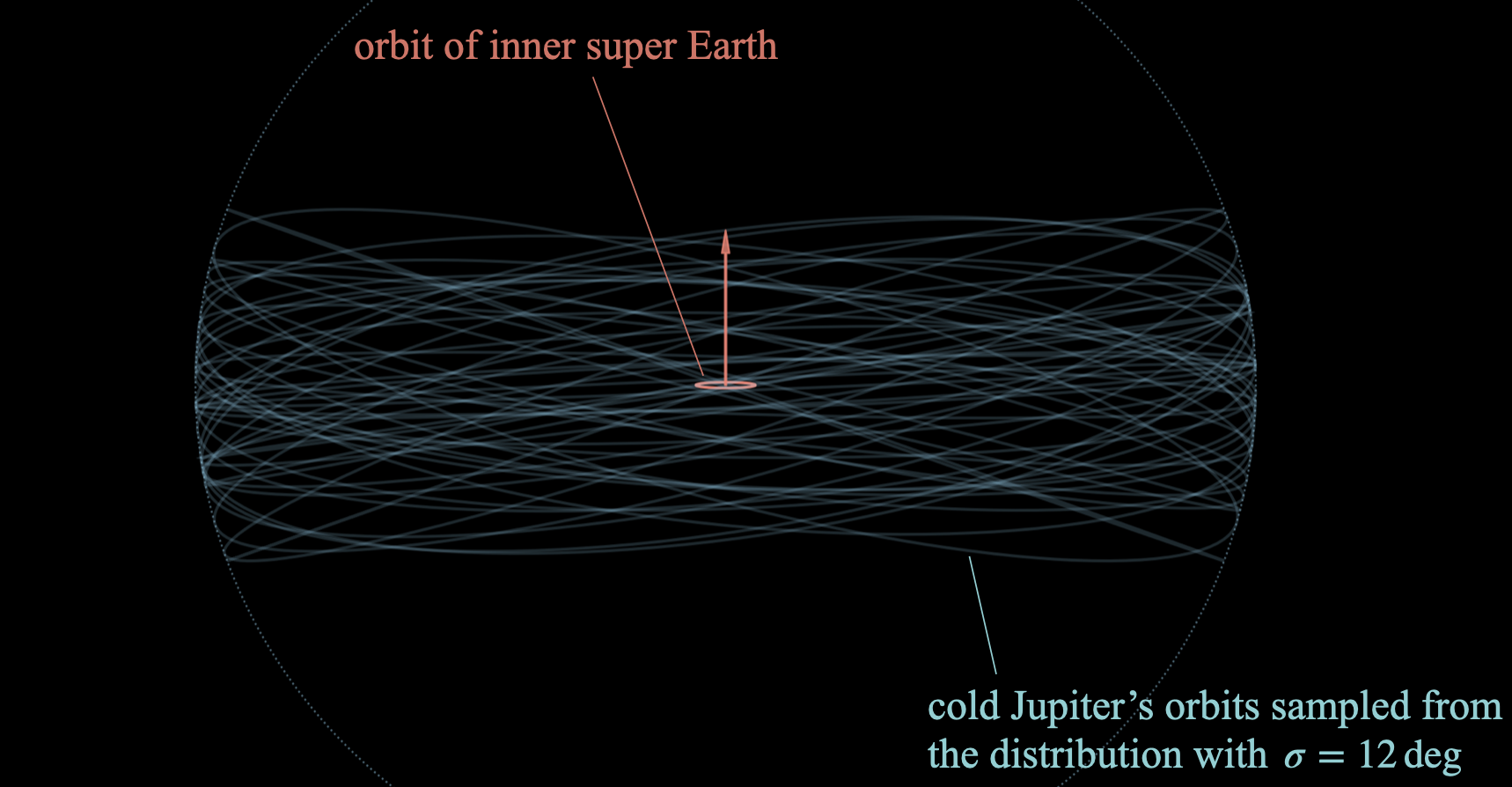
For example, Masuda et al. (2020) statistically inferred the mutual inclinations between short-period super-Earths and long-period giant planets in the same systems (Figure 1). Systems in which the inner super-Earths follow nearly circular orbits were found to be as well aligned as the Solar System, whereas systems with more eccentric inner orbits showed larger orbital misalignments. This suggests that dynamical processes such as planet–planet scattering can leave signatures in both the shapes and orientations of planetary orbits.
Figure 1: Spread of orbital planes for outer giant planets (blue) relative to inner super-Earths (red). The blue orbits are drawn from the mutual-inclination distribution inferred in Masuda et al. (2020).
I also investigate the dynamical histories of individual planetary systems from their three-dimensional orbital architectures. For example, TTV analysis revealed a highly inclined outer companion to a short-period giant planet; long-term orbital calculations then showed how the companion’s gravity can excite the planet’s orbit and how subsequent tidal interaction with the host star can shrink that orbit (Masuda 2017). Such observations allow us to use present-day orbital architectures as clues to the dynamical histories of planetary systems.
Misalignment between planetary orbits and stellar spin axes
In addition to misalignments among planetary orbits, the misalignment between a planet’s orbital axis and the spin axis of its host star is another important clue to the formation and evolution of planetary systems (Figure 2). In the Solar System, the planetary orbital plane and the Sun’s spin axis are nearly aligned, whereas some exoplanet systems show substantial spin–orbit misalignments. Investigating the origin of these misalignments can shed light on both the dynamical evolution of planetary orbits and the formation and evolution of the circumstellar disks in which planets are born.
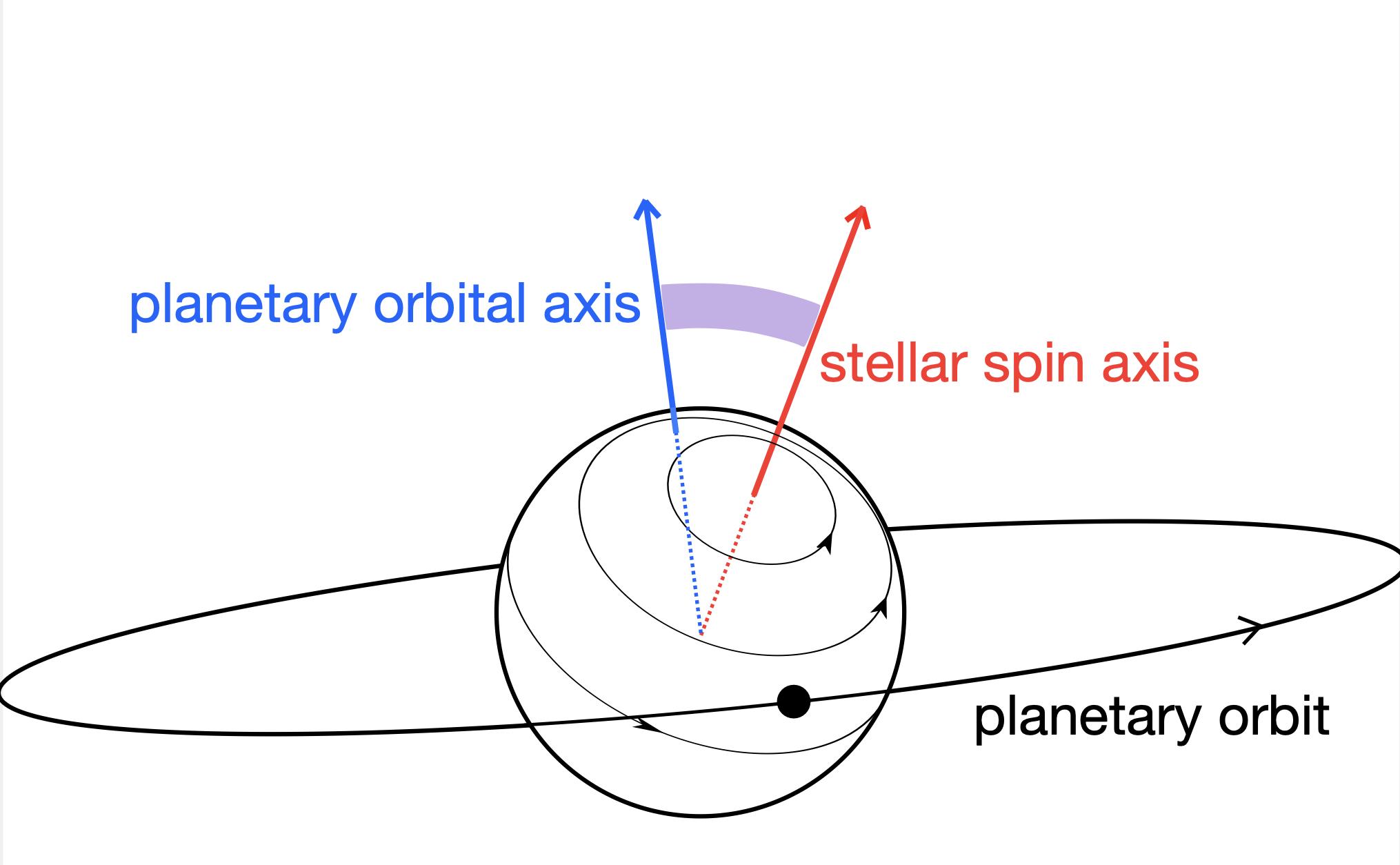
One way to study this geometry is to measure the inclination of the stellar spin axis relative to our line of sight. For transiting planets, the planetary orbit is viewed nearly edge-on, so combining the stellar rotation period and radius with the projected rotation velocity measured spectroscopically constrains the orientation of the stellar spin axis and hence the spin–orbit misalignment. I developed a statistical framework that properly accounts for measurement uncertainties and geometrical degeneracies in this inference (Masuda & Winn 2020). This framework makes it possible to study spin–orbit misalignments statistically across many planetary systems and thereby investigate their formation and dynamical evolution.
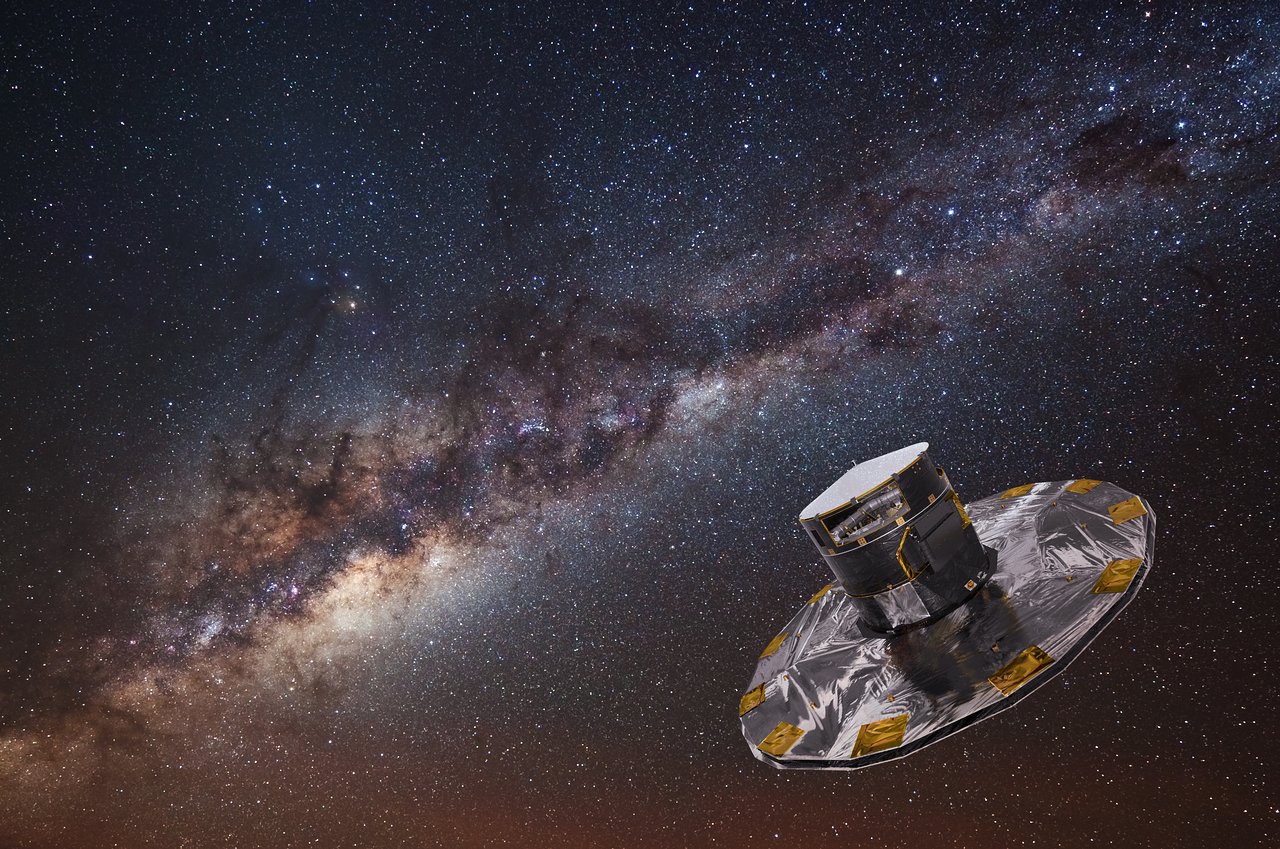
I plan to extend this approach to long-period Jupiter-like planets (cold Jupiters), for which spin–orbit information has so far been limited, by combining it with astrometry from Gaia (Figure 3). Gaia can measure orbital inclinations from the tiny motion of a host star across the sky induced by an orbiting planet. I will combine these orbital inclinations with stellar spin inclinations inferred from high-resolution spectroscopy with the Seimei Telescope, rotation periods, and stellar radii, and statistically characterize the distribution of spin–orbit misalignments (see also Stellar rotation and age). Comparing these systems with hot Jupiters will help distinguish whether spin–orbit misalignments primarily arise from later dynamical evolution or instead reflect primordial misalignment between stellar rotation and the planet-forming disk.
Occurrence rates of exoplanets
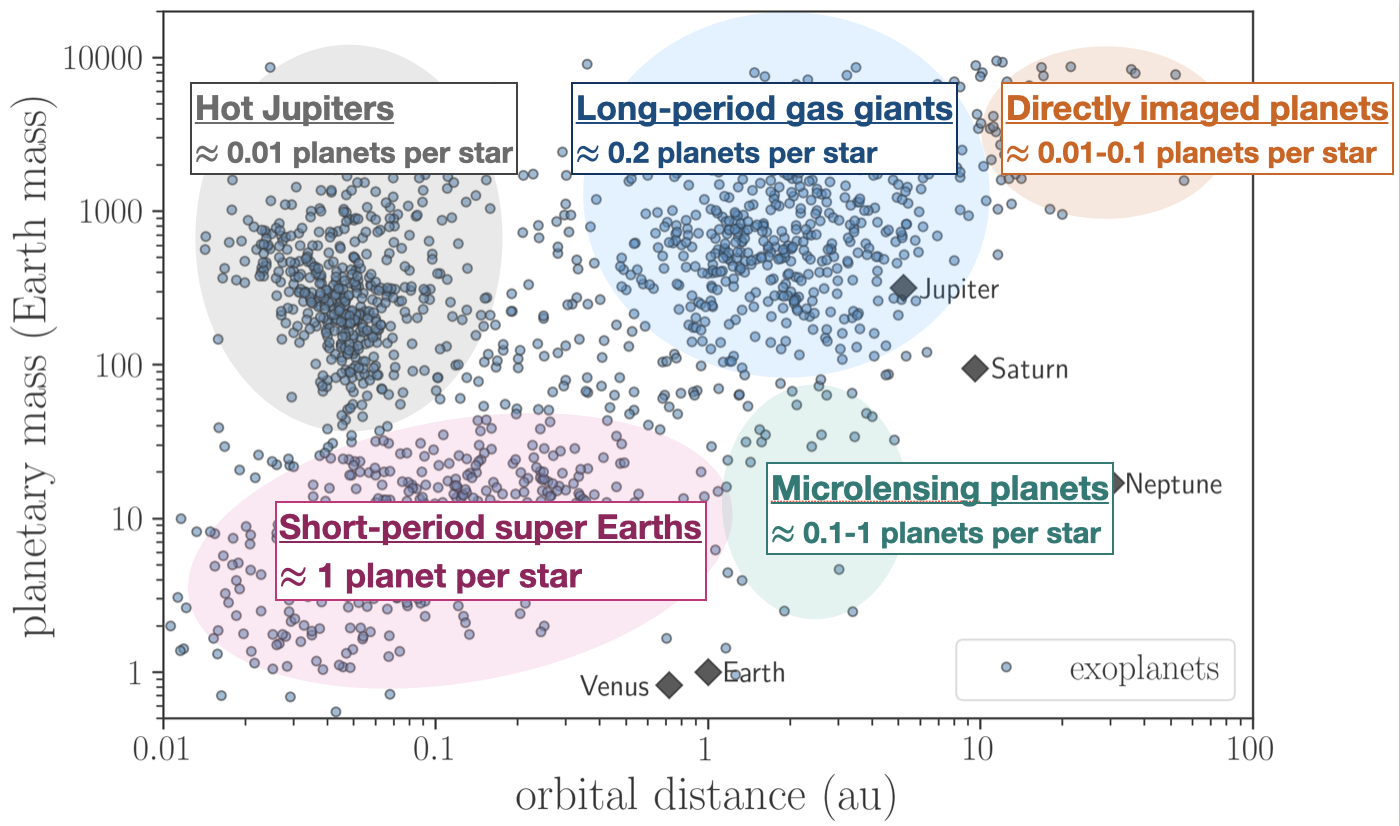
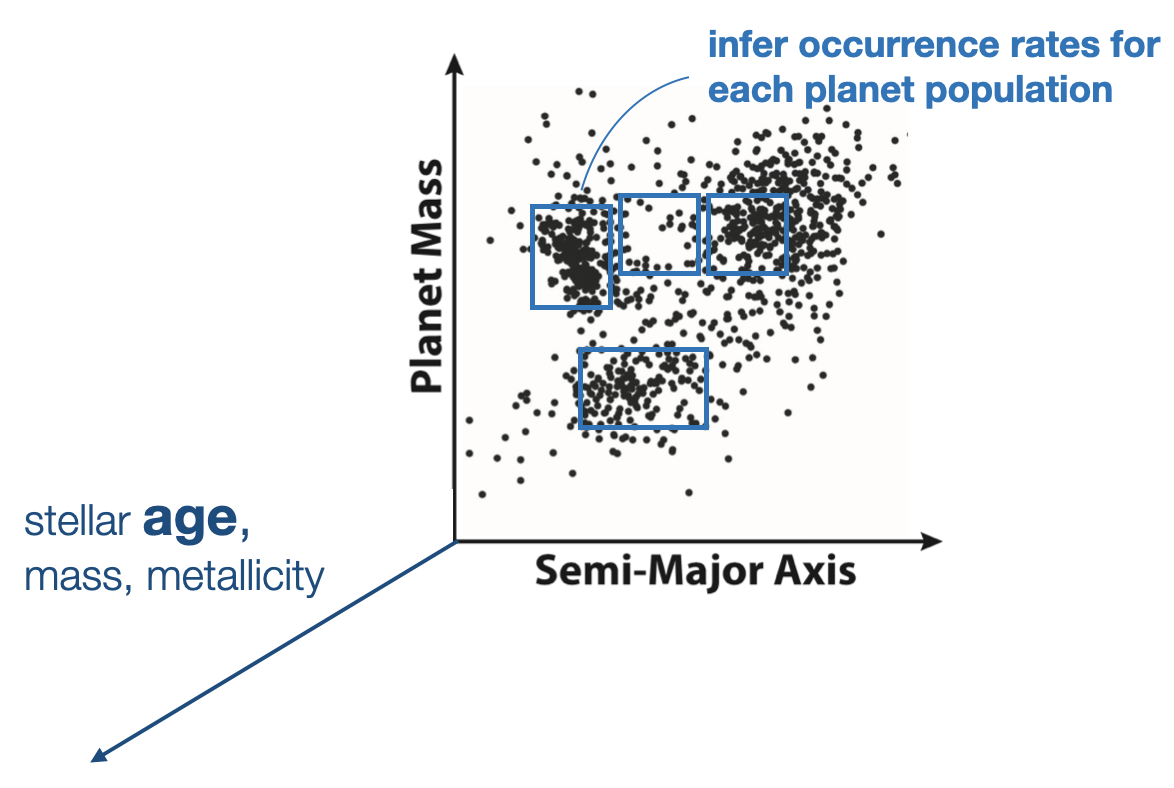
Figure 1 shows known exoplanets in the plane of planetary mass and distance from the host star. This observed distribution reflects not only how common different kinds of planets are, but also strong differences in detectability. The apparent abundance of giant planets close to their stars (hot Jupiters), for example, partly reflects the fact that such planets are particularly easy to detect with radial-velocity and transit surveys. To understand how common planetary systems are, and whether the Solar System is typical or unusual, we must quantify and correct for the detection efficiency of each survey and infer the underlying planet occurrence rate. The dependence of occurrence rates on planetary properties and orbital architecture also provides important clues to planet formation. I work on both the inference of planet occurrence rates and the statistical methodology needed to estimate them.
Dependence of planet occurrence on stellar age
Beyond the properties of the planets themselves, measuring planet occurrence as a function of host-star age allows us to investigate, at the population level, how planetary physical properties and orbits evolve over time.
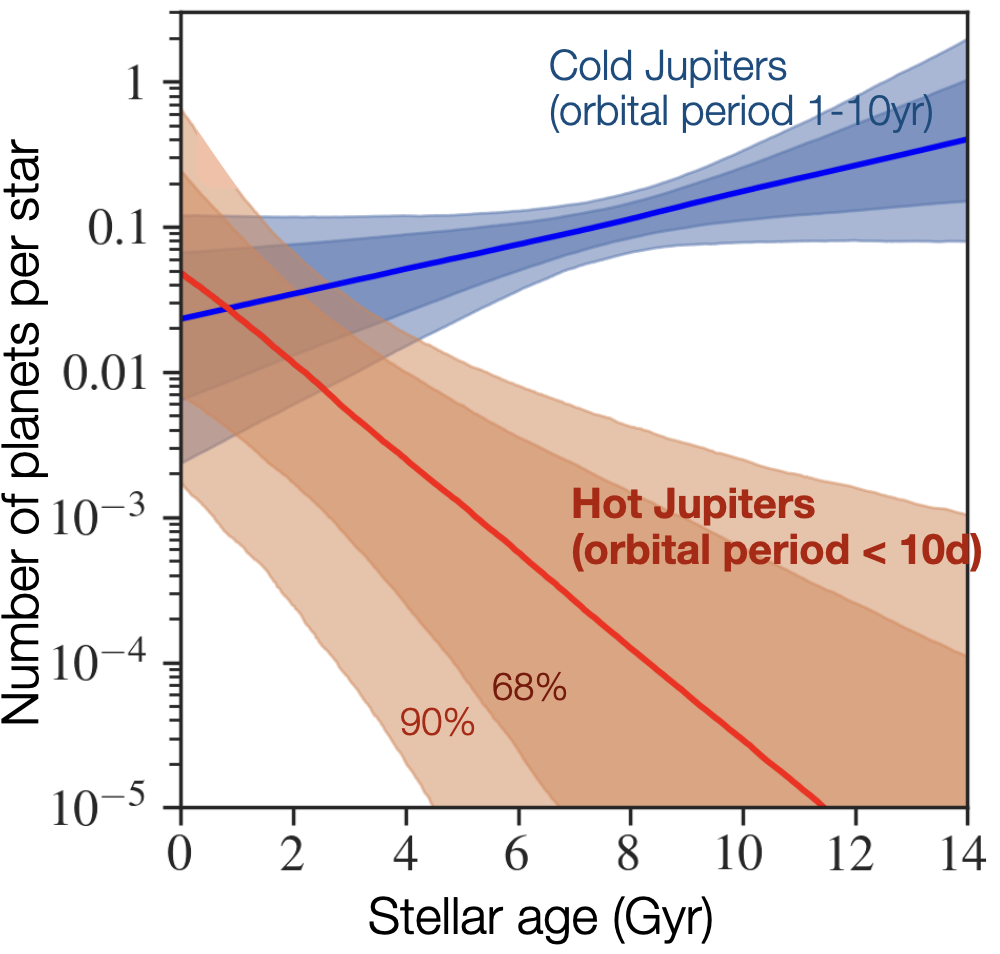
In Miyazaki & Masuda (2023), we developed a statistical method to infer planet occurrence simultaneously as a function of stellar age, mass, and metallicity (Figure 2). These stellar properties have correlated uncertainties, so treating them consistently is essential. Applying this method to a ground-based radial-velocity survey, we performed the first occurrence-rate analysis of Jupiter-mass planets that explicitly accounted for these uncertainties. We found evidence that the occurrence rate of hot Jupiters decreases during the later stages of stellar main-sequence evolution (Figure 3). This trend is consistent with orbital decay driven by tidal interaction with the host star, eventually leading to planetary engulfment. Similar behavior had previously been suggested from stellar kinematics; our analysis provided statistical support directly from planet occurrence rates.
Stellar rotation and age
To study how planetary systems change with time, we need reliable ages for their host stars. I therefore also study gyrochronology, one of the most promising methods for estimating stellar ages from rotation. Sun-like stars generally spin down as they age through magnetic braking, a process in which magnetized stellar winds carry away angular momentum. Their rotation periods can therefore provide information about age. To improve and extend gyrochronology, it is essential to establish the relation between stellar rotation and age observationally.
Measuring stellar rotation
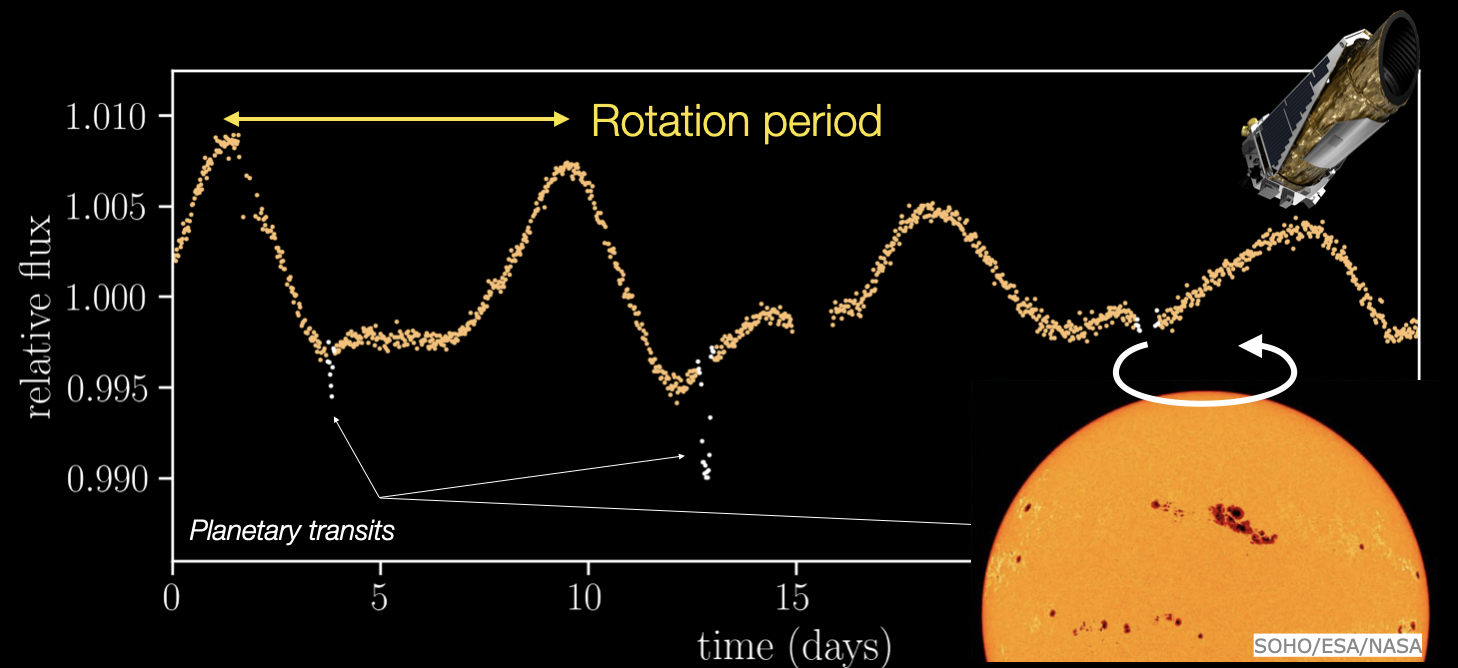
Stellar rotation can be studied using both space-based photometry and ground-based spectroscopy. Starspots and other surface features rotate in and out of view, producing periodic brightness variations. Rotation periods can therefore be measured from periodic signals in light curves (brightness as a function of time) obtained by missions such as Kepler and TESS (Figure 1).
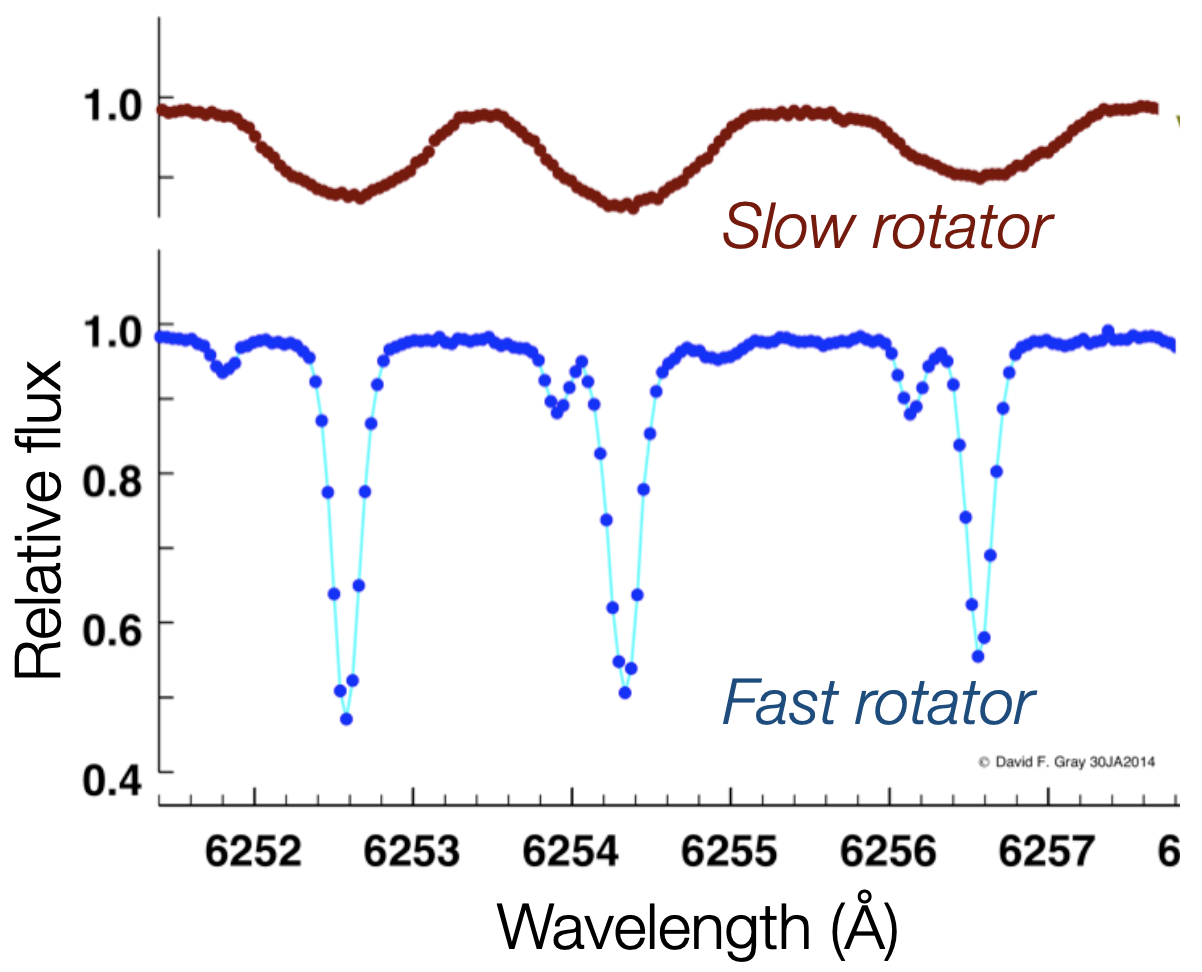
A complementary approach uses stellar spectra. For a rotating star, absorption lines from the approaching and receding hemispheres are Doppler shifted in opposite directions. When the light from the whole stellar disk is combined, the absorption lines are broadened, allowing us to infer the rotation speed from the line broadening (Figure 2). The observed broadening depends not only on the intrinsic rotation speed but also on the orientation of the spin axis. By modeling those orientations statistically across a sample of stars and combining the measurements with stellar radii, we can infer the distribution of rotation periods (Masuda et al. 2022).
Rotation evolution of old Sun-like stars
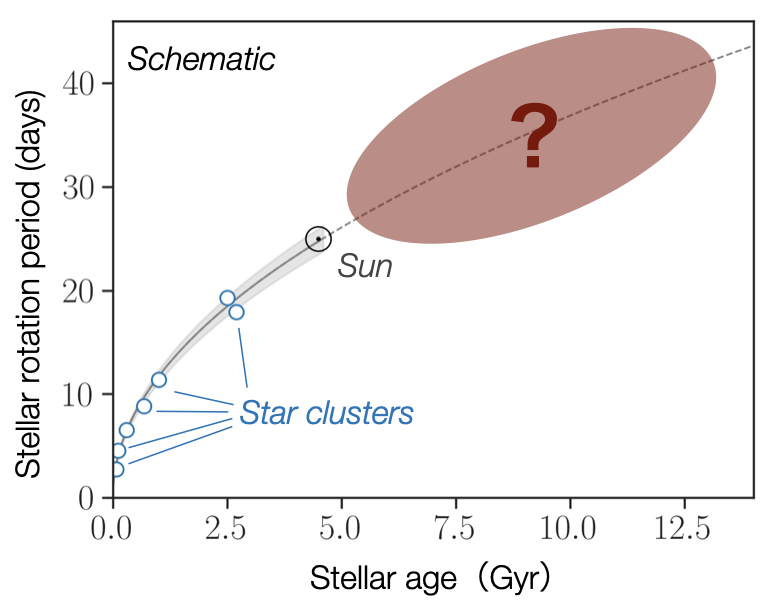
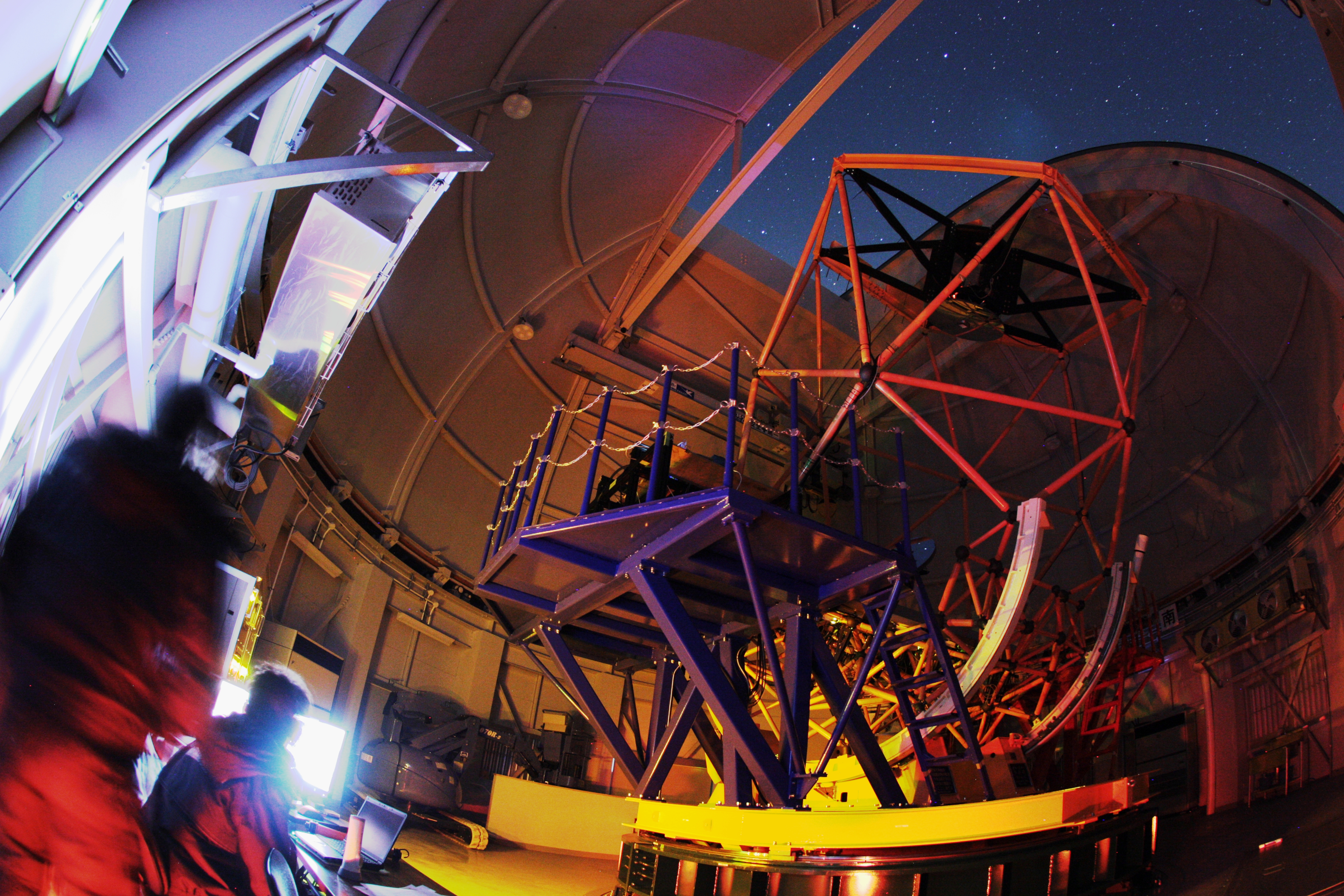
The rotation–age relation has traditionally been calibrated by measuring rotation periods photometrically for stars in clusters. For older stars, however, the brightness modulation becomes weaker and rotation periods become increasingly difficult to detect, so photometric measurements provide limited information for stars as old as or older than the Sun (Masuda 2022a; Masuda 2022b). To complement this approach, I study stellar rotation using high-resolution spectroscopy with GAOES-RV on the Seimei Telescope (Figure 3, left). By combining space-based photometry with spectroscopy, and explicitly accounting for the different kinds of stars for which each method can measure rotation, I aim to obtain a more complete picture of rotation in older stars. Comparing these rotation measurements with independently estimated stellar ages will then allow us to determine how rotation evolves at ages comparable to and greater than the age of the Sun (Figure 3, right).
These measurements are important not only for extending the range over which gyrochronology can be applied, but also for understanding stellar magnetic activity. By studying the rotation evolution of old stars, we can investigate how the underlying magnetic activity and magnetic braking change with stellar age.
Binary stars
A binary star is a pair of stars that are gravitationally bound and orbit their common center of mass. Using photometric and spectroscopic data and analysis techniques similar to those used in exoplanet studies, I search for binaries containing compact objects such as white dwarfs.
Searching for binaries with compact objects
When the components of a binary are sufficiently close, interactions such as mass transfer can drive evolutionary paths very different from those of isolated stars. In binaries where one component has evolved into a white dwarf, the present-day orbit and masses retain information about those past interactions. Discovering and characterizing systems over a wide range of orbital separations therefore provides important constraints on binary evolution.
One way to find white-dwarf binaries on relatively wide orbits is through self-lensing, gravitational lensing within a binary system. When a white dwarf passes in front of a normal star, its gravity can focus the background starlight strongly enough that the lensing brightening exceeds the dimming caused by occultation. By searching Kepler light curves for this effect, we discovered four white-dwarf binaries with relatively wide orbits of order a few au (Kawahara et al. 2018; Masuda et al. 2019). These systems are much wider than the short-period white-dwarf binaries that have traditionally been studied in detail, making them useful probes of how binary interactions determine final orbital configurations.
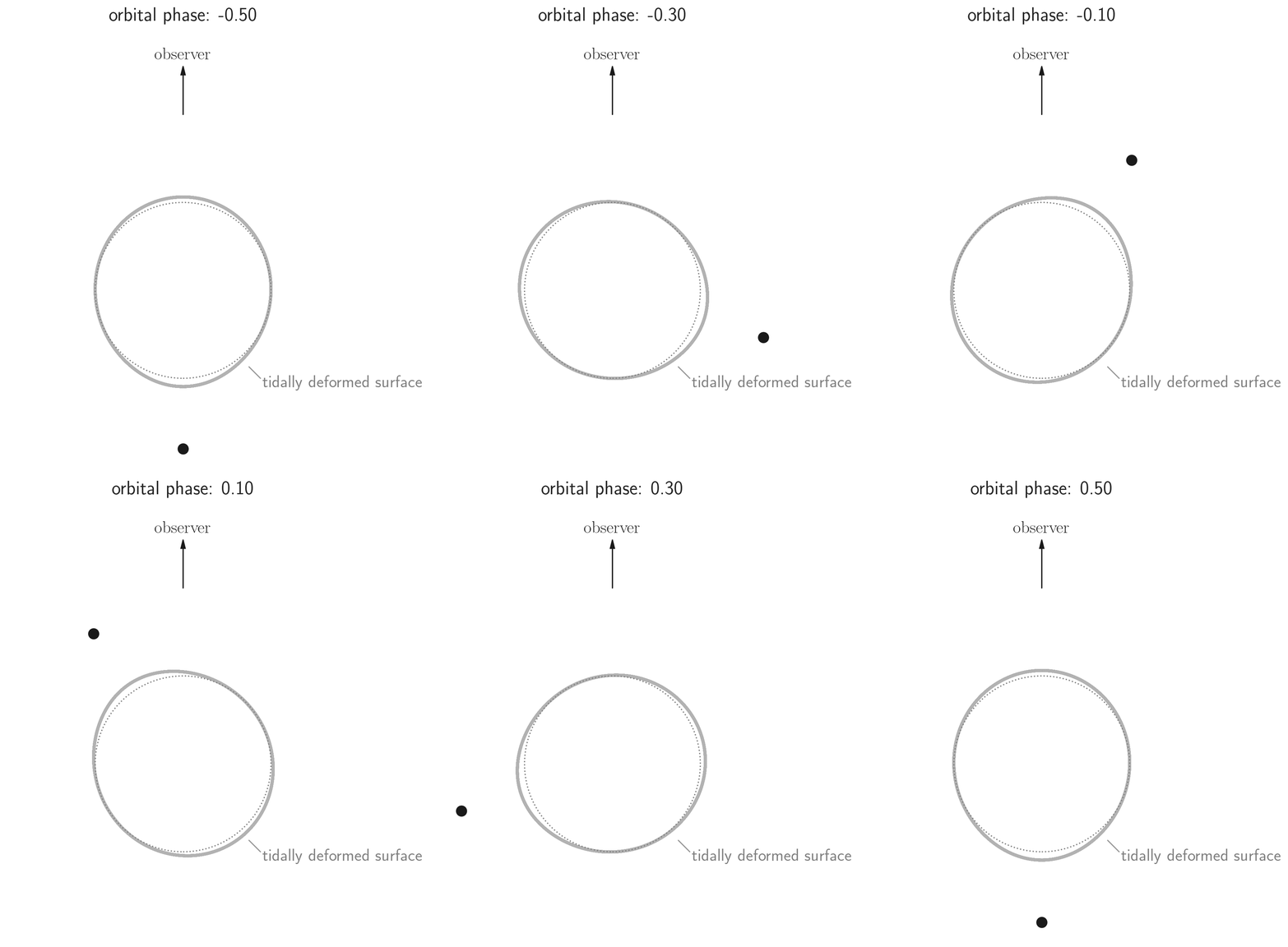
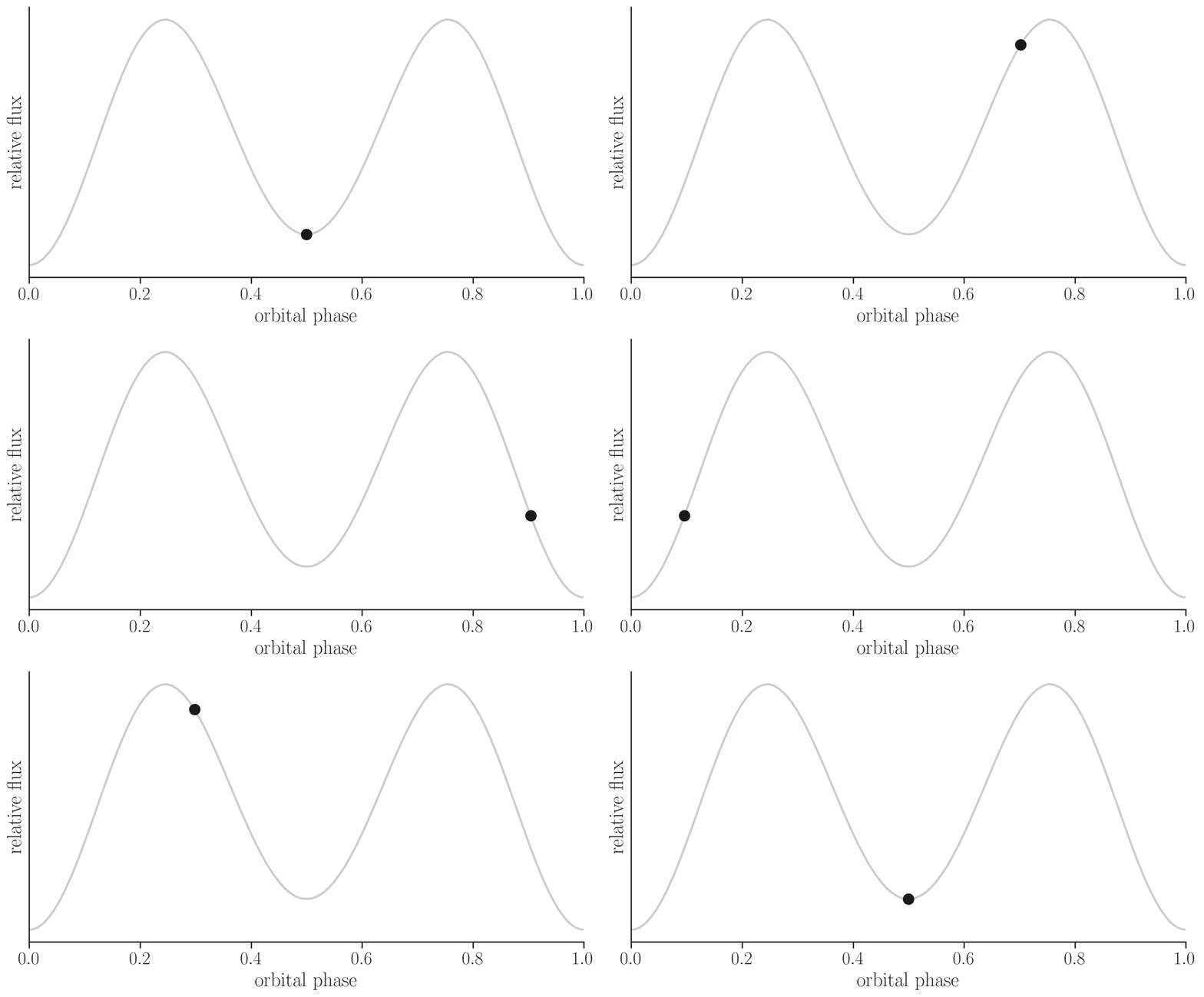
In closer binaries, tidal forces from a companion distort the visible star. As the system orbits, the projected shape changes and produces a periodic photometric signal known as ellipsoidal variation (Figure 1). By searching TESS light curves for this signal and combining the detections with radial-velocity observations from the Seimei and Nayuta telescopes, we have also discovered close binaries containing white dwarfs (Shiraishi et al. 2026). The white dwarfs found so far are massive, around or above one solar mass, placing them among the more massive white dwarfs known in close binaries. Similar searches may eventually reveal companions such as black holes that emit very little light of their own (Masuda & Hotokezaka 2019).
By combining high-precision photometry from space telescopes with ground-based spectroscopy and searching for binaries in previously less explored ranges of separation and mass, I use these systems to test binary evolution, including the effects of interactions between stars, over a broader parameter space.
Atmospheres of planets and brown dwarfs
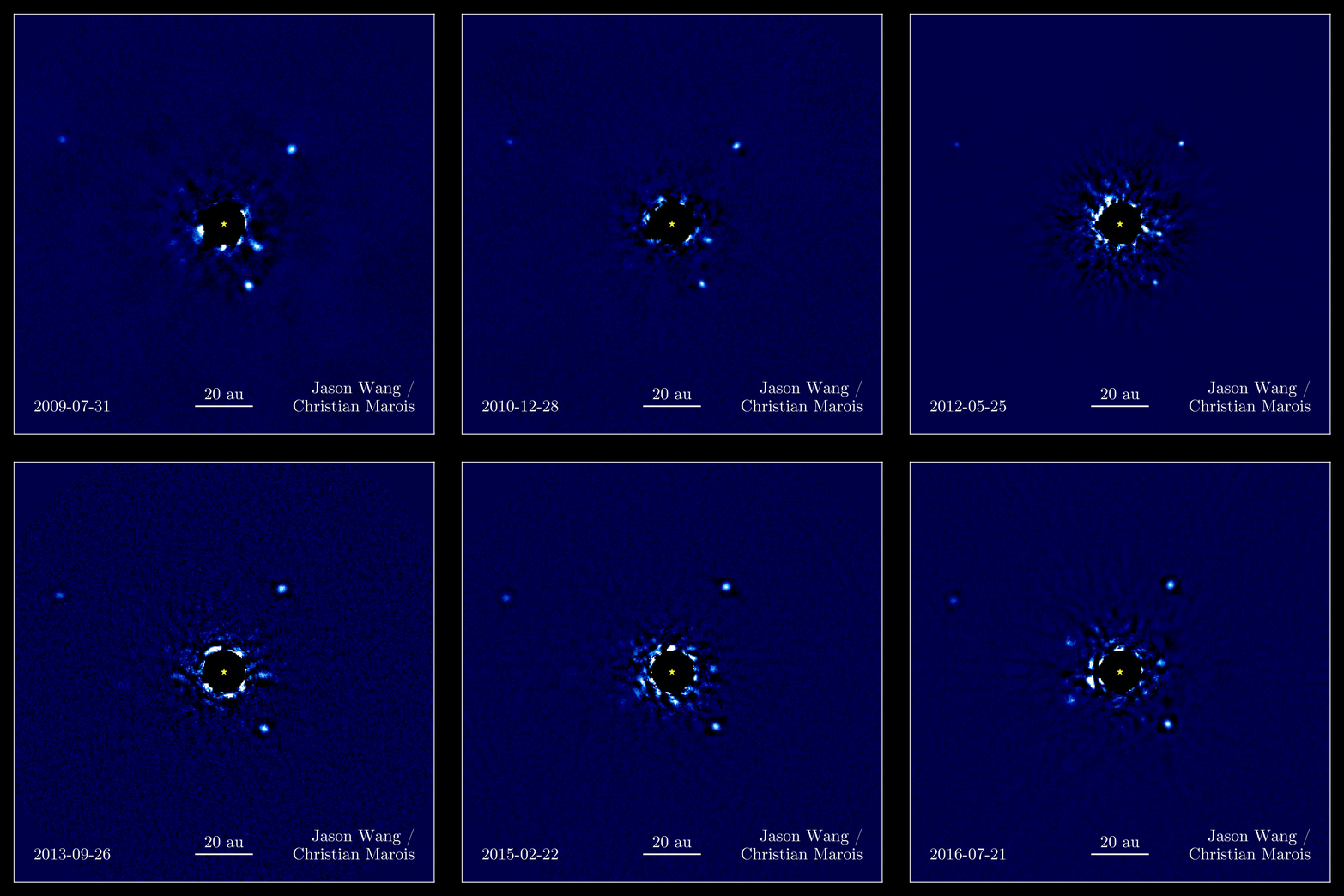
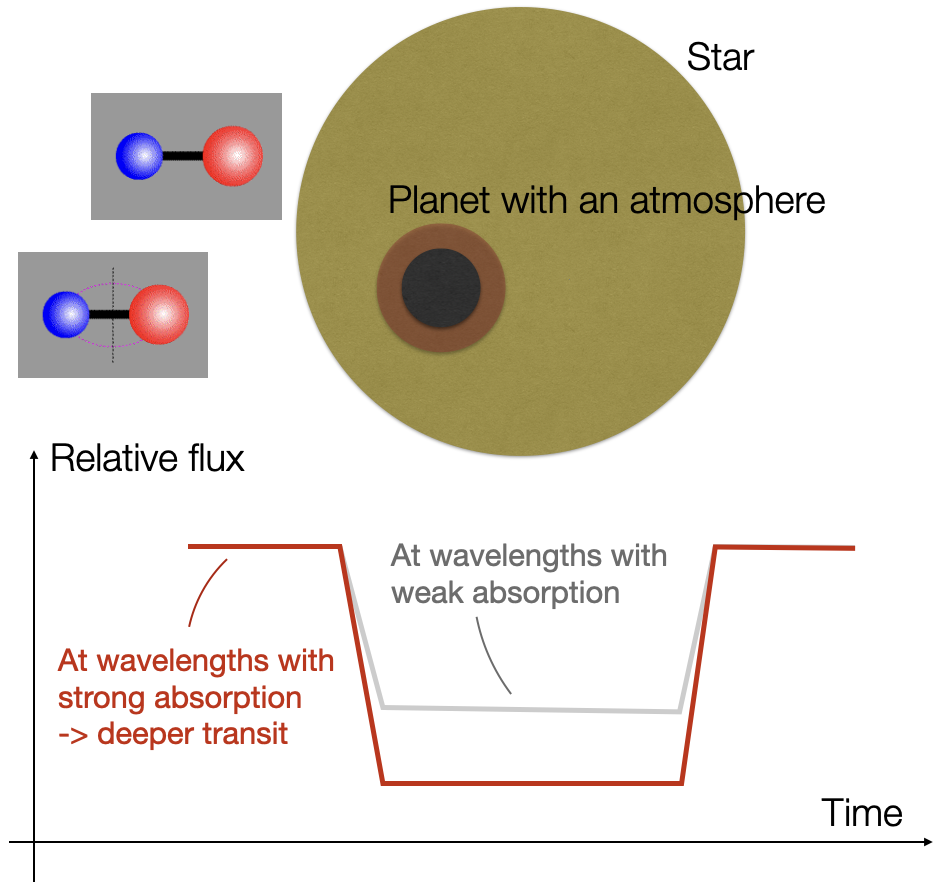
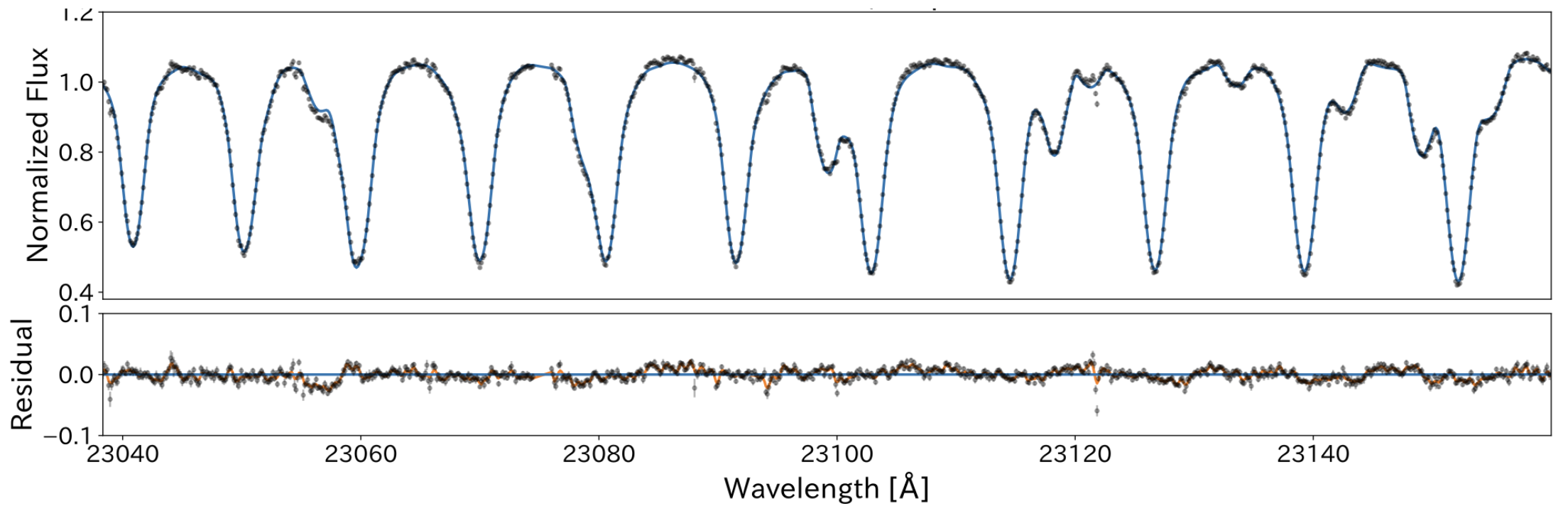
Recent observations have made it possible to obtain spectra of directly imaged exoplanets (Figure 1) and brown dwarfs and to study molecules and chemical abundances in their atmospheres in detail. High-precision transit observations with JWST provide another route: by measuring the wavelength dependence of a transit, we can detect molecular absorption imprinted on starlight transmitted through a planet’s atmosphere (Figure 2). Such observations allow us to infer atmospheric temperature structures, chemical compositions, clouds, and related properties, providing clues to planetary formation and evolution.
I collaborate with Hajime Kawahara at ISAS/JAXA, Yui Kawashima at Kyoto University, and others on analysis methods and models for characterizing the atmospheres of planets and brown dwarfs, as well as observations with the near-infrared high-resolution spectrograph IRD on the Subaru Telescope.
Statistical inference in astronomy
In astronomy, inferring the physical properties of astronomical objects from limited observational data requires combining physical models with statistical inference. I am also interested in the statistical and computational methods that underpin these analyses.
Bayesian inference
Bayesian inference uses data and a model to describe the plausible values of unknown physical quantities as probability distributions. In astronomy, analyses must often handle not only measurement uncertainties but also parameter degeneracies and observational selection effects. Bayesian methods are particularly useful because they provide a unified framework for problems ranging from the properties of individual objects to the distributions of entire populations.
Examples of my work include the probabilistic treatment required to infer stellar spin inclinations from rotation velocities and projected rotation velocities (Masuda & Winn 2020), inference of population-level rotation-period distributions from projected rotation velocities for many stars (Masuda et al. 2022), and a hierarchical Bayesian analysis of hot-Jupiter occurrence as a function of stellar age that accounts for uncertainties and correlations in stellar age, mass, and metallicity (Miyazaki & Masuda 2023). More recently, I have also been studying the Bayesian framework for analyzing gravitational microlensing events (Nunota & Masuda, submitted).
JAX and automatic differentiation
Fitting complex physical models to observational data often requires evaluating the model many times while exploring probability distributions in a large number of parameters. I therefore work on making physical models differentiable using automatic differentiation with JAX and exploiting the resulting gradients in optimization and inference methods such as Hamiltonian Monte Carlo (HMC; Figure 1).
I have developed open-source codes including jnkepler for N-body calculations of multiplanet systems, jaxstar for isochrone fitting with stellar-evolution models, and jaxspec for modeling high-resolution stellar spectra (see Software for details). Differentiable physical models like these enable efficient inference even in high-dimensional problems with strong parameter correlations.

Inverse problems
An inverse problem seeks to reconstruct an underlying structure or distribution that cannot be observed directly from the data that it produces. Different underlying structures can sometimes generate very similar observations, so the solution is often not unique. Physical and statistical assumptions are therefore needed to constrain the range of plausible solutions.
In Kawahara & Masuda (2020), we studied a method called Bayesian Dynamic Mapping to infer surface maps of spatially unresolved exoplanets from their time-variable brightness. As rotation and orbital motion change which parts of the planet are visible, the observed light variations can be used to probabilistically reconstruct both the spatial structure of the surface and its evolution with time.
Student research
Ph.D. thesis
Toward Accurate Spectroscopic Characterization of Exoplanetary Atmospheres: A Retrieval Study of the Benchmark Brown Dwarf Binary Luhman 16AB
Inferred the atmospheric composition and temperature structure of the brown-dwarf binary Luhman 16AB from high-resolution spectra and quantified model-dependent systematic uncertainties.
Related research theme: Atmospheres of planets and brown dwarfsPublication: Yama et al. (2026), The Astrophysical Journal, 997, 118
ExoJAX Retrievals of VLT/CRIRES Spectra of Luhman 16AB: C/O Ratios and Systematic Uncertainties →
Master’s thesis
Testing gyrochronology with visual binaries in the field
Compared rotation periods in visual binaries whose components are expected to be coeval, testing whether gyrochronology calibrated in star clusters can also be applied to field stars.
Related research theme: Stellar rotation and ageSearch for a fifth planet in the KOI-94 system using transit timing variations and prediction of the next planetary eclipse
Searched for an additional, previously undetected fifth planet from the transit timing variations of KOI-94 and predicted the timing of the next planet–planet eclipse including its gravitational effects.
Related research theme: Planetary interiors and atmospheric evolution with TTVsMass measurement of the binary V723 Mon using radial-velocity variations caused by tidal distortion
Combined tidal radial-velocity variations with projected rotation velocities measured from high-resolution spectroscopy to infer the masses in the V723 Mon binary.
Related research theme: Binary starsPublication: Tomoyoshi et al. (2024), The Astrophysical Journal, 977, 151
Weighing Single-lined Spectroscopic Binaries Using Tidal Effects on Radial Velocities: The Case of V723 Monocerotis →Orbital eccentricity distribution of exoplanets around M dwarfs
Inferred planetary eccentricities from transit light curves and stellar densities and used hierarchical Bayesian modeling to study the eccentricity distribution of planets around M dwarfs.
Related research theme: Geometric architecture of planetary systemsObservational inference of misalignment between stellar spin axes and protoplanetary disks in young systems
Inferred the inclinations of stellar spin axes and protoplanetary disks and used hierarchical Bayesian modeling to characterize their misalignment distribution.
Related research theme: Geometric architecture of planetary systemsPlanet occurrence in wide binaries
Estimated planet occurrence rates in wide binaries and compared them with those around other stars while accounting for contamination from unresolved binaries.
Related research theme: Occurrence rates of exoplanets
Undergraduate research
Testing reparameterization and HMC for gravitational microlensing light-curve analysis
Analyzed gravitational microlensing light curves including annual parallax and tested improvements in sampling efficiency from reparameterization and Hamiltonian Monte Carlo (HMC).
Related research theme: Statistical inference in astronomyGravity-darkening analysis of the long-period eclipsing binary KIC 8648356
Investigated whether gravity darkening is detectable in the light curve of the long-period eclipsing binary KIC 8648356 and assessed whether it could constrain stellar spin–orbit geometry.
Related research theme: Geometric architecture of planetary systemsTesting the rotation–age relation with twin binaries
Measured and compared rotation velocities from high-resolution spectra of twin binaries to test the rotation–age relation for stars outside clusters.
Related research theme: Stellar rotation and ageMass inference for directly imaged planets from orbital modeling including mutual gravitational interactions
Modeled the orbits of the directly imaged HR 8799 system including planet–planet gravitational interactions and explored dynamical mass constraints independent of thermal-evolution models.
Related research theme: Planetary interiors and atmospheric evolution with TTVsTesting the stellar rotation–age relation with twin binaries
Compared rotation periods of twin binaries using a Gaia binary catalog and Kepler photometry to test the stellar rotation–age relation.
Related research theme: Stellar rotation and ageTransit timing variation analysis of the Kepler-296 system
Analyzed the transit timing variations of Kepler-296 and constrained planetary masses from their mutual gravitational interactions.
Related research theme: Planetary interiors and atmospheric evolution with TTVsRadial-velocity analysis of the giant-star binary UU Cnc including tidal distortion
Modeled radial velocities of the giant-star binary UU Cnc including tidal distortion to constrain the binary masses and the nature of the companion.
Related research theme: Binary stars